Industry operating context

Where fruit processing operations lose performance—and what evidence helps decide.

Industrial performance and reliability context for fruit receiving, washing, sorting, preparation, drying, freezing, packing, and the process-support systems around them.

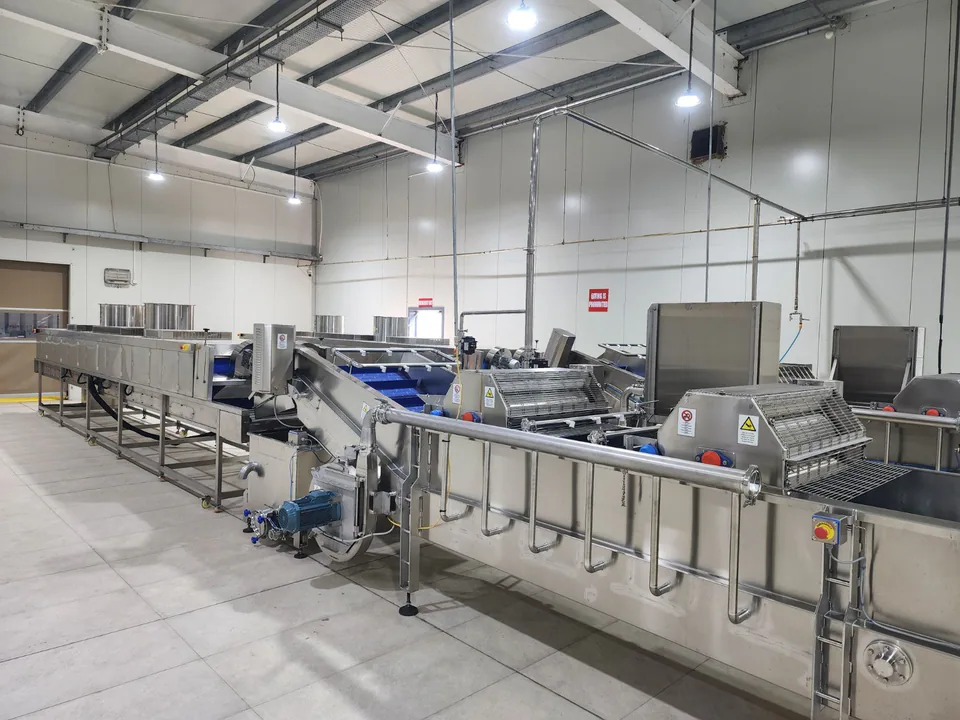
Close view of stainless-steel food-processing equipment and utility pipework inside a production room.
Machinery, utilities & process interfaces

Assets and interfaces that shape the operating context.

  • Washers, graders, sorting and preparation lines
  • Peelers, slicers, pulpers, presses, and dryers
  • IQF conveyors, refrigeration interfaces, and cold-room equipment
  • Pumps, piping supports, motors, drives, and packaging systems
  • Air, water, steam, and process-support utilities within scope
Common operating problems

Patterns that deserve structured investigation.

  • Seasonal production pressure and limited shutdown windows
  • Moisture, product residue, corrosion, and cleaning exposure
  • Conveyor tracking, bearing, drive, and alignment defects
  • Repeated emergency repairs without complete history
  • Weak start-up and pre-season readiness
Operational, safety & continuity exposure

Consequence should be understood before the intervention is chosen.

  • Lost raw material during peak intake
  • Food-safety exposure from damaged equipment or temporary fixes
  • Cold-chain interruption
  • Failure of a single bottleneck machine
Buyer decision questions

Clarify the decision before selecting the engineering response.

These questions do not diagnose the factory from a webpage. They help management identify what must be understood next.

01

Which bottleneck or support asset can constrain the line during peak intake or a narrow production window?

02

Which recurring stops are equipment failures, process interactions, cleaning effects, or insufficiently measured losses?

03

What should be inspected, measured, prepared, or verified before the next season, campaign, shutdown, or restart?

Controlled public problem areas

Start from the operating problem—not from a product or discipline.

Only problem families already approved for public use are shown here. A problem can cross multiple disciplines, so the first task is to frame the decision and evidence correctly.

Equipment Reliability

Equipment keeps failing, tripping, wearing out, or returning to the same defect.

Problems where machinery condition, repeated failure, criticality, maintenance quality, or asset history may be driving operational loss.

Discuss this problem
Production Performance

Production is below target, unstable, bottlenecked, or losing too much time.

Problems where throughput, utilisation, recurring stops, constraints, operating practice, or equipment interaction may be limiting output.

Discuss this problem
Maintenance System

Maintenance is reactive, poorly recorded, difficult to plan, or not closing repeat defects.

Problems involving preventive maintenance, work control, asset registers, spare parts, responsibilities, failure history, and maintenance evidence.

Discuss this problem
Measurement and Operational Data

A decision depends on information the factory does not reliably measure or record.

Problems where runtime, cycles, energy, temperature, pressure, vibration, production state, downtime, or another operational signal is missing or unreliable.

Discuss this problem
Cause Not Yet Clear

Something is wrong, but the factory does not yet know whether the cause is mechanical, operational, utility, control, data, or process related.

A neutral entry route for problems that should be classified through evidence rather than requiring the client to diagnose the issue before contacting an engineer.

Discuss this problem
Related decision guides

Relevant problem guides for this sector.

These links connect sector context to controlled public diagnostic questions. They do not assume that the same root cause applies across factories.

Browse the complete Problem Library
A disciplined first-pass lens

Move from operating context to the next defensible decision.

01

Map bottlenecks, seasonal critical assets, and the process interfaces that can stop useful production

02

Separate mechanical reliability issues from process, cleaning, utility, and information gaps

03

Prepare evidence for pre-season, operating, shutdown, and restart decisions

04

Prioritise recurring defects, critical spares, and unresolved actions by operational consequence

Measurement, workflow & technology readiness

Technology should answer an operating question—not lead the diagnosis.

Maintenance Systems

Seasonal routines, line areas, inspection points, downtime categories, cold-chain assets, spare parts, and role-specific approvals can be prepared before a controlled pilot.

Machine-State Measurement

Runtime, minor stops, cycles, and bottleneck signals may support maintenance or production decisions when the required decision is defined first.

Industrial Data Acquisition

Existing machine, refrigeration, or utility signals may later support trend and verification work where access, competence, and data quality are confirmed.

Review the technology and delivery boundary
Start with the industrial problem

Discuss an operating problem in your fruit processing operations.

Share the affected process or machine, operating consequence, evidence already available, location, and the decision you need to make. Scope and competence boundaries are confirmed before work begins.